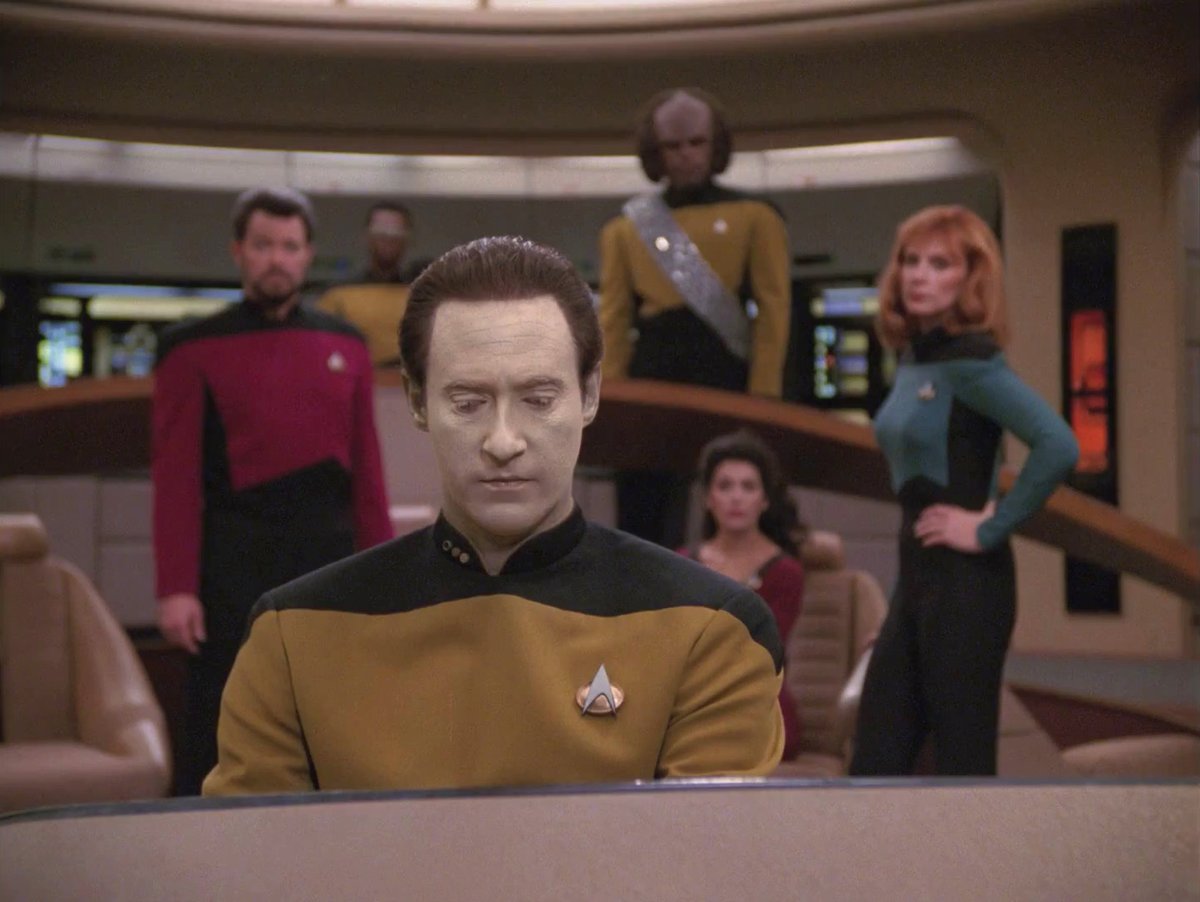
Starfleet knew it was coming, but no one could truly prepare for the emotional fallout. After the earth-shattering cliffhanger of "The Best of Both Worlds, Part I," Star Trek: The Next Generation didn't just pick up the pieces; it forged new pathways, cementing its place as a groundbreaking science fiction series. The Critical Reception & Legacy of Star Trek TNG Season 4 isn't just about a collection of episodes; it’s about a show hitting its stride, confidently exploring character, morality, and the vast unknown in ways that resonated deeply with viewers and critics alike.
Season 4 wasn't merely a continuation; it was a transformation. Building on the strong foundations of its predecessors, this season elevated TNG from a promising successor to a genre-defining powerhouse. It explored the personal traumas of its beloved captain, expanded the political landscape of the Klingon Empire, and introduced formidable new adversaries, all while never shying away from the philosophical dilemmas that are the hallmark of Star Trek.
Season 4: At a Glance
- Resolved the Epic Cliffhanger: Successfully concluded "The Best of Both Worlds," leaving a lasting impact on Picard.
- Deepened Character Arcs: Offered unparalleled insight into Picard, Worf, Data, and even minor characters like O'Brien.
- Expanded the Universe: Introduced the Cardassians and the Trill, adding complex new layers to Federation politics and alien physiology.
- Balanced Action and Philosophy: Masterfully wove thrilling space battles with introspective, morally challenging narratives.
- Set the Stage for Future Conflicts: Laid groundwork for the Klingon Civil War and the Cardassian-Federation cold war, impacting Deep Space Nine.
- Occasional Missteps: While largely excellent, some episodes were criticized for illogical plots or missed opportunities.
- A Defining Era: Widely considered one of TNG's strongest, most consistent seasons, crucial to its enduring legacy.
The Aftermath: Picking Up the Pieces from "Best of Both Worlds"
Season 4 began where Season 3 left off, with Captain Picard assimilated into the Borg collective. The resolution, "The Best of Both Worlds, Part II," wasn't just a powerful action sequence; it was a profound exploration of trauma. Critics praised its writing quality, the tension of the Borg firefights, and the clever, almost impossible method the Enterprise devised for victory. The episode’s lasting image – Picard, alone, silently grappling with the horror of his assimilation – perfectly encapsulated the emotional scars that would define him for seasons to come. It wasn't just an escape; it was a permanent change, deepening a character who had, until then, largely remained stoic.
Following this, "Family" became a fan favorite, lauded for its moving story and brilliant continuity. Notably, this episode deliberately avoided action and bridge scenes, focusing instead on the deeply personal. It delved into Worf’s discommendation, Picard’s post-Borg psychological recovery, and offered a rare glimpse into Picard’s family life. The beautiful, quiet scenes between Picard and his brother, complemented by Wesley’s poignant reflections on his late father, showcased TNG’s growing confidence in prioritizing character over spectacle, a move that critics found both brave and deeply rewarding.
Deepening the Ensemble: Character-Driven Storytelling Ascendant
Season 4 truly distinguished itself through its commitment to its core characters, offering multiple episodes dedicated to expanding their backstories, motivations, and emotional landscapes.
Data's Quest for Humanity
Brent Spiner's performance as Data, Lore, and Dr. Soong in "Brothers" was a masterclass, intellectually and visually thrilling. While some considered it filler, the episode successfully expanded Data's lore, delving into his "suffering" as Lore stole his chance at emotion and Soong's death created a profound loss. It set a precedent for TNG's willingness to build intricate narratives around its most beloved android.
Later, "Data's Day" provided significant character development not just for Data, but also for O'Brien and Keiko, whose wedding served as a memorable backdrop. Data's meticulous logs to Bruce Maddox (a continuity nod to "The Measure of a Man") underscored his continuous quest for self-understanding. And in "In Theory," Data's exploration of romantic love, while sometimes bordering on ridiculous, was entertaining and highlighted his persistent effort to emulate human behaviors.
Worf's Klingon Saga
The season brilliantly developed the Klingon narrative, transforming it into a compelling "soap opera" that captivated audiences. "Reunion" was a standout, described as fantastic for its exploration of life and death within the Klingon hierarchy. It saw the deaths of K'mpec, K'Ehleyr, and Duras, introducing Alexander and the formidable Gowron. Worf's discommendation, initially keeping him sidelined, became a catalyst for direct conflict, culminating in Worf’s powerful and well-earned murder of Duras – a scene often cited as one of TNG's most impactful.
This arc continued with "Redemption, Part I," an excellent episode praised for its brilliant continuity. It picked up threads from "Sins of the Father" and "Reunion," with Picard encouraging Worf to challenge his discommendation. The episode followed the Enterprise to the Klingon homeworld for Gowron's ascension, setting the stage for the Klingon Civil War and introducing the controversial, yet intriguing, revelation of Sela as a Romulan Tasha Yar. This ongoing Klingon storyline provided rich political intrigue and emotional depth, becoming a cornerstone of the TNG universe.
Crusher, Troi, Geordi, and Wesley's Journeys
Even beyond the main trio, Season 4 provided significant moments for other key crew members. Dr. Crusher took center stage in "Remember Me," an episode praised for its great idea and fun execution, despite being plagued by "absurd technobabble." It creatively explored the concept of a diminishing crew and saw the return of the Traveler, picking up a loose thread with Wesley.
Troi's character, though sometimes criticized for "suffering" clichés, was challenged in "The Loss." While some found the reveal of intelligent 2D life forms disappointing, the episode offered an interesting concept and showed Troi lashing out at the crew, providing a rare glimpse into her vulnerability.
Geordi La Forge's past was explored in "Identity Crisis," a decent stand-alone episode featuring original alien species. He also had notable interactions in "Galaxy's Child" and faced the unsettling "The Mind's Eye," an episode highly regarded for its directing, tone, and the believable Romulan plot it presented.
Finally, "Final Mission" served as an acceptable and well-executed send-off for Wesley Crusher, offering higher-quality music, two interesting plot threads, and ensuring every character played an important role in his departure. This marked a turning point, as the character, often a source of debate among fans, transitioned from the main cast.
Expanding the Galaxy: New Foes, Allies, and Philosophies
Season 4 wasn't just about internal character growth; it also significantly broadened the Star Trek universe, introducing compelling new species and revisiting beloved antagonists. If you're looking for an in-depth exploration of every mission, you can find a comprehensive episode guide to TNG Season 4 that delves into each individual journey.
The Cardassians: A Deceptive New Threat
"The Wounded" stood out as a pivotal episode, building on the development of O'Brien and Keiko after their wedding in the preceding "Data's Day." More importantly, it served as a strong introduction to the Cardassians, painting them as a deceptive and warlike race. This episode laid crucial groundwork for future conflicts and established a nuanced new adversary for the Federation, providing a stark contrast to the Borg and Romulans. The Cardassians' intricate society and expansionist tendencies would become a major focus for Deep Space Nine, directly traceable to this powerful introduction.
The Trill: Questions of Identity
"The Host" introduced the fascinating Trill species, prompting profound questions about identity in a blended species. The merging of Odan with Riker, showcasing Riker's personality bleeding into Odan, was highlighted as an excellent example of the innovative alien species ideas Star Trek should explore. While the character of Odan might not have fully done justice to the Trill concept, the episode sparked philosophical discussions that would be further developed and explored with Jadzia Dax in Deep Space Nine.
Romulan Intrigue and Missed Opportunities
The Romulans continued to be a source of tension, particularly in "The Mind's Eye," where a believable and in-character Romulan plot unfolded, introducing the new plot thread of Sela. However, "Future Imperfect," despite its cute and fun premise, was a disappointment for many. A significant buildup about a Romulan conspiracy led to no Romulan ending or resolution, leaving viewers wanting more.
Q's Glorious Return
The iconic trickster Q made a memorable return in "QPid," an episode universally praised for its outstanding continuity. It expertly picked up events from "Captain's Holiday" (Vash's return) and "Déjà Q" (Q's favor to Picard), even setting up DS9: Q-Less. Functioning wonderfully as a stand-alone, it offered a perfect blend of action, adventure, humor, and sustained interest, reminding everyone why Q remained one of TNG's most beloved recurring characters.
Moral Dilemmas and Societal Reflections
Beyond the grand adventures, Season 4 continued TNG’s tradition of using science fiction to explore complex moral and social issues, often sparking debate among its audience.
- "Suddenly Human": Picard faced a difficult moral choice regarding Jono, the human raised by aliens. The unexpected but fitting ending, where Picard makes a decision defying typical expectations, was a testament to the show's willingness to embrace moral ambiguity.
- "First Contact": This episode powerfully illustrated how conservative mindsets can impede societal progress, using the character of Krola, whose attitudes resonated with real-world politics, to explore a fictitious "first contact" situation. It was a clear and effective allegory for contemporary social issues.
- "The Drumhead": While examining a real moral dilemma concerning justice and paranoia, this episode faced criticism for its execution. Many felt characters, except Picard, acted out of character, and interesting questions were neglected in favor of fear and uncertainty. It highlighted the challenge of translating complex ethical questions into a compelling, character-consistent narrative.
- "Half a Life": Lwaxana Troi stole the show in this episode, delivering extraordinary speeches on the morality of euthanasia that evoked powerful emotions. The excellent chemistry between Timicin and Lwaxana skillfully explored the complex question of prolonging or purging lives, showcasing TNG's ability to tackle profound existential themes.
- "Devil's Due": A successful humor episode, largely due to the character and actress chosen for Ardra, this lighthearted story used a supposed deal with the devil to playfully challenge belief systems and demonstrate the crew's scientific ingenuity. Its replay value lies in watching viewers try to decipher Ardra's "magic."
The Occasional Stumble: Moments of Criticism
Even a season as strong as Season 4 had its less-than-stellar moments, reminding us that even the best shows face production challenges or creative misfires.
- "Legacy": While decent, this episode was critiqued for trite interactions between Ishara and Data and an unsurprising betrayal. However, Ishara's latent disgust with her sister was noted as a realistic and interesting character detail. It's an episode that is often overlooked when discussing the season's highlights.
- "Clues": The premise of this episode faced scrutiny for its illogical nature, with critics suggesting a simpler explanation (like a wormhole causing a day of unconsciousness) would have been more believable than rigging the ship to simulate only 30 seconds passing.
- "Night Terrors": This episode was largely considered dismal, slow, and repetitive. Its plot, centered on characters going insane and Troi's nightmares, felt unsurprising and somewhat offensive to some viewers. Despite some good moments (Guinan handling a brawl, Data taking charge), they did little to elevate the overall impression.
- "The Nth Degree": This episode started strong but ended disappointingly. Viewers learned little about the benevolent Cytherians, the "ten days" with the Enterprise occurred off-screen, and a new amazing propulsion technique was inexplicably not retained, relying on a "mysterious ending cliché" that left many frustrated.
- "The Loss": While commended for seeing Troi lash out at the crew, the episode's reveal that the 2D life forms were intelligent rather than simple "moths" was found disappointing by some, as it deviated from their initial less complex portrayal.
These episodes serve as a reminder that even during a peak season, maintaining consistent perfection is a monumental task. Yet, their flaws are often overshadowed by the overwhelming quality of the season as a whole. For a broader perspective on the entire run of the series, consider diving into Star Trek: The Next Generation Season 4 and its significant place in the franchise.
Season 4's Enduring Legacy: Why It Still Matters
Star Trek: The Next Generation Season 4 is widely regarded as one of the series' finest, and its legacy is multifaceted. It’s where TNG truly found its voice, moving past the initial shadow of the Original Series and establishing its own distinct identity and authority within the Star Trek canon.
The Peak of Character-Driven Storytelling
This season proved TNG could deliver compelling narratives without relying solely on action. The profound emotional journey of Picard post-Borg, the intricate development of Worf’s Klingon heritage, and Data's continuous quest for humanity formed the backbone of the season, resonating deeply with viewers. It established these characters as complex, evolving individuals whose personal struggles were as captivating as any intergalactic conflict.
World-Building and Foreshadowing
Season 4 masterfully expanded the Star Trek universe. The introduction of the Cardassians was a stroke of genius, providing a nuanced, morally ambiguous adversary that wasn't simply evil but driven by complex political and cultural factors. This laid the essential groundwork for Star Trek: Deep Space Nine, making "The Wounded" a pivotal episode in the entire franchise. Similarly, the ongoing Klingon "soap opera" deepened an alien culture, providing rich lore that would continue to influence future Trek iterations. Even the introduction of the Trill, however imperfect, sparked ideas that would blossom in subsequent series.
Thematic Depth and Moral Authority
The season consistently engaged with complex moral and philosophical questions, from euthanasia ("Half a Life") to societal prejudice ("First Contact") and the dangers of paranoia ("The Drumhead"). TNG, particularly in Season 4, cemented its role as a platform for social commentary, using the futuristic setting to reflect on contemporary human issues without preaching. This commitment to intelligent, thoughtful storytelling is a cornerstone of the Star Trek legacy.
Solidifying TNG's Identity
By Season 4, The Next Generation had shed any lingering comparisons to its predecessor. It had cultivated its own distinct look, feel, and narrative style. The ensemble cast was performing at its peak, and the writing staff had a clear vision for the show's direction. It was a confident, consistent season that truly solidified TNG's place not just as a successful spin-off, but as a cultural phenomenon in its own right. Many fans and critics point to Season 4 as the period when TNG truly entered its "golden age."
Beyond the Viewscreen: Why Season 4 Matters Today
The enduring appeal of Star Trek: The Next Generation Season 4 lies not just in its individual episodes, but in its collective impact on the franchise and on television as a whole. It showcased how science fiction could be both intellectually stimulating and emotionally resonant, a blueprint for countless shows that followed.
Its exploration of trauma (Picard's assimilation), identity (Data, Trill), and societal ethics remains relevant, offering timeless insights into the human condition. The season's commitment to continuous character development ensured that even after four years, the crew of the Enterprise-D felt fresh, growing, and capable of surprise.
For new viewers discovering TNG, Season 4 serves as a powerful testament to the show's strengths. For longtime fans, it's a nostalgic return to a period of consistent excellence, where bold storytelling and thoughtful exploration converged to create truly unforgettable television. The legacy of Star Trek: The Next Generation Season 4 isn't just about what happened on screen; it's about the continued inspiration it provides, pushing us to explore new frontiers, both within ourselves and in the vastness of the galaxy.