Resistance isn't futile when it comes to revisiting the golden age of Starfleet exploration. If you’re anything like us, the mere mention of Star Trek: The Next Generation’s fourth season conjures images of epic Borg confrontations, deep dives into character psyches, and the subtle, yet significant, shifts that solidified TNG's place in television history. This isn't just a list; it’s your definitive Star Trek TNG Season 4 Episode Guide and Recaps, crafted to transport you back to the bridge of the Enterprise-D, offering fresh insights and trusted details.
Season 4 wasn't just another year for the Enterprise crew; it was a pivot point. It resolved one of TV's most iconic cliffhangers, delved into the personal lives of our beloved characters, introduced pivotal new species, and set the stage for crucial narrative arcs that would define the series. Prepare to re-engage with the season that truly saw TNG come into its own, balancing high-stakes action with thoughtful, character-driven drama.
At a Glance: Why TNG Season 4 Stands Out
- The Borg Aftermath: Kicks off with the gripping conclusion to "The Best of Both Worlds," showing the lasting trauma and recovery.
- Deep Character Work: Explores Picard's family, Worf's Klingon heritage, Data's humanity, and Wesley's path to Starfleet Academy.
- Klingon World-Building: Introduces Chancellor Gowron and lays the groundwork for a major Klingon civil war, shaping Worf's destiny.
- New Threats and Allies: We meet the Cardassians and the Trill, expanding the Federation's complex diplomatic landscape.
- "Head Trips" and Moral Dilemmas: Many episodes push the boundaries of perception and force the crew to confront challenging ethical questions.
- Wesley Crusher's Farewell (for now): Marks a significant shift as a core character leaves the Enterprise for Starfleet Academy.
Star Trek TNG Season 4: A Turning Point for the Galaxy
By its fourth season, Star Trek: The Next Generation had shed its nascent skin, emerging as a confident, storytelling powerhouse. The lingering trauma from Locutus of Borg, the introduction of compelling new species, and the deepening of character relationships transformed the show from a promising successor into an iconic science fiction benchmark. This was the season where TNG truly hit its stride, blending action, philosophy, and heartfelt drama into a potent mix that still resonates with fans today.
This season, comprising 25 unforgettable episodes, masterfully wove together grand galactic narratives with intimate personal struggles. You’ll find intense battles alongside poignant family reunions, mind-bending psychological thrillers beside insightful cultural commentaries. It’s a testament to the writing staff’s growing confidence and the cast’s incredible chemistry. For a broader overview of this pivotal period, delve into our comprehensive guide on Star Trek TNG Season 4.
Let’s navigate each episode, dissecting the plots and uncovering the enduring impact of this stellar season.
Episode-by-Episode Deep Dive
74. "The Best of Both Worlds, Part II"
- Air Date: September 24, 1990
- Ground Truth Recap: Acting Captain Riker's attempt to destroy the Borg vessel commanded by Picard-cum-Locutus fails. The Borg destroy 39 ships at the Battle of Wolf 359. Picard is rescued, and Data uses Picard's Borg connection to stop another impending attack.
- Our Take: The conclusion to one of Star Trek's greatest cliffhangers delivered on its promise of tension and drama. Seeing Picard's struggle with his assimilation and the Federation's sheer devastation at Wolf 359 truly hammered home the Borg threat. Data’s ingenious use of Picard’s Borg connection wasn't just a plot device; it was a profound commentary on humanity’s resilience and ingenuity in the face of overwhelming odds. It set a dark, mature tone for the season, reminding us that even in a utopian future, sacrifices are made and scars remain.
75. "Family"
- Air Date: October 1, 1990
- Ground Truth Recap: Picard revisits his family vineyard and a contentious relationship with his brother. Worf hosts his adoptive Russian parents, and Wesley receives a hologram message from his father.
- Our Take: A beautiful, character-driven episode that allows the crew to process the trauma of "Best of Both Worlds" in intensely personal ways. Picard’s raw vulnerability with his brother, Robert, reveals the human cost of his Borg ordeal. Meanwhile, Worf's delightful interactions with his adoptive parents offer a humorous yet touching exploration of identity, and Wesley's message from his deceased father is a poignant moment of connection. It’s a rare look behind the Starfleet uniforms, reminding us that these heroes are, at their core, just people.
76. "Brothers"
- Air Date: October 8, 1990
- Ground Truth Recap: Data's creator, Dr. Soong, summons Data to his planet, a signal that also attracts Data's "brother" Lore. Brent Spiner plays three roles in this episode.
- Our Take: Brent Spiner truly shines, delivering a masterclass performance by portraying Data, Lore, and their creator, Dr. Noonien Soong. This episode is a fantastic exploration of family, identity, and the very nature of sentience. Soong's complex relationship with his creations, the manipulative cunning of Lore, and Data's yearning for connection make this a compelling entry that deepens our understanding of the android's journey. It’s also a thrilling cat-and-mouse game, punctuated by emotional depth.
77. "Suddenly Human"
- Air Date: October 15, 1990
- Ground Truth Recap: An Enterprise away team finds five Talarian soldiers requiring medical attention; one is discovered to be a human victim of abuse, prompting a debate about his proper place.
- Our Take: This episode tackles the weighty issue of cultural identity and the meaning of "home." The discovery of Jono, a human raised by a hostile alien species, forces Picard to confront the prime directive's limitations and the complexities of intervention. Is it right to "rescue" someone who considers their captors their family, despite their methods? It’s a nuanced ethical debate, showcasing TNG's commitment to thought-provoking narratives over simplistic answers.
78. "Remember Me"
- Air Date: October 22, 1990
- Ground Truth Recap: Dr. Crusher experiences crew members disappearing, with memory of them vanishing for everyone except her, until she is the only person left aboard the Enterprise.
- Our Take: A chilling, psychological "bottle episode" that’s a masterclass in tension and creeping horror. Gates McFadden delivers a tour-de-force performance as Dr. Crusher, grappling with an increasingly surreal reality. The episode cleverly explores themes of isolation, memory, and the fabric of existence, leaving you questioning what’s real alongside Dr. Crusher. It’s a testament to TNG's ability to craft compelling narratives within the confines of the ship.
79. "Legacy"
- Air Date: October 29, 1990
- Ground Truth Recap: Ishara Yar, sister of Lt. Yar, requests the Enterprise's help to resolve a conflict on a Federation colony, but she is not what she seems. Data demonstrates coldness when challenged.
- Our Take: This episode provides a fascinating look into Tasha Yar's turbulent past through her sister, Ishara. Ishara's hardened pragmatism and willingness to betray for survival clash dramatically with Starfleet's ideals, highlighting the difficult lives many face outside the Federation's utopia. Data's calculated coldness, when his loyalty is questioned, is a subtle but impactful moment, reminding us of his ongoing journey toward understanding human emotion.
80. "Reunion"
- Air Date: November 5, 1990
- Ground Truth Recap: Ambassador K’Ehleyr, Worf’s former love, returns with their child. Picard and K’Ehleyr attempt to avert a Klingon civil war, but K’Ehleyr is killed. This episode marks the first appearance of Gowron, the Klingon chancellor.
- Our Take: A pivotal episode for Worf and the entire Klingon Empire. The shocking revelation of Alexander, Worf's son, and the tragic death of K’Ehleyr imbue this story with profound emotional weight. "Reunion" also introduces the formidable Gowron, who would become a recurring and influential figure in Klingon politics. The political intrigue, the honor duels, and Worf’s personal anguish make this a standout episode that expands the Star Trek universe considerably.
81. "Future Imperfect"
- Air Date: November 12, 1990
- Ground Truth Recap: Commander Riker experiences a "head trip" where he is captain of an Enterprise 16 years in the future, with a son, but remembers none of the intervening past.
- Our Take: Another excellent "head trip" episode, this time focusing on Riker's anxieties about command and fatherhood. The narrative cleverly plays with your expectations, creating a sense of unease as Riker tries to piece together a future that feels both familiar and alien. The eventual reveal is a clever twist, but the real strength of the episode lies in its exploration of identity and the longing for a life perhaps not yet lived.
82. "Final Mission"
- Air Date: November 19, 1990
- Ground Truth Recap: Before Wesley Crusher departs for Starfleet Academy, Picard takes him on an away mission that goes awry.
- Our Take: A bittersweet farewell to Wesley Crusher, framed by a classic Picard-and-Wesley adventure. The episode is a rite of passage, showcasing Wesley's growing maturity and Picard's evolving mentorship. Their time stranded together provides a chance for reflection and a touching send-off. It’s a poignant moment that signals a transition for the show, as Wesley steps into his own future.
83. "The Loss"
- Air Date: December 10, 1990
- Ground Truth Recap: The Enterprise encounters two-dimensional beings, leading to Counselor Troi losing her empathic abilities.
- Our Take: This episode delves into Troi's identity, exploring what happens when a core part of her being is stripped away. Her struggle with the loss of empathy is relatable and well-portrayed, forcing her to find new ways to connect and define herself. The two-dimensional aliens provide a unique scientific puzzle, but the heart of the story lies in Troi's emotional journey.
84. "Data's Day"
- Air Date: December 17, 1990
- Ground Truth Recap: A day-in-the-life vignette through Data's perspective, involving an incident with a Vulcan ambassador and Romulans, and the wedding of Miles and Keiko O’Brien.
- Our Take: A charming and ingenious episode told entirely from Data's objective, yet increasingly insightful, perspective. It brilliantly captures the mundane and extraordinary aspects of life on the Enterprise, culminating in the delightful wedding of Miles and Keiko O'Brien. Data's attempts to understand human customs and humor provide both comic relief and genuine warmth, making this a fan-favorite for its unique narrative structure and character moments.
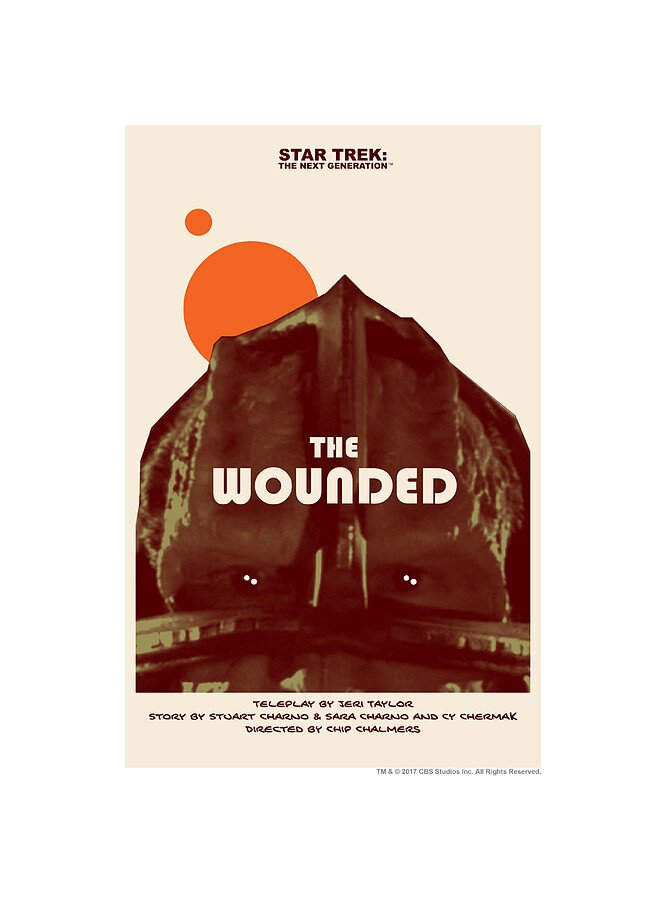
85. "The Wounded"
- Air Date: January 7, 1991
- Ground Truth Recap: Introduces the Cardassians. Federation starship captain Maxwell acts against Cardassians along the Federation-Cardassian border.
- Our Take: This episode is a landmark, introducing the menacing and morally ambiguous Cardassians – a species that would become a staple of the Star Trek universe. It presents a complex ethical dilemma: when does a rogue Starfleet captain's vigilantism become justified, even if it threatens a fragile peace? Picard's struggle to maintain neutrality while facing a former comrade's crusade makes for compelling viewing and offers a darker glimpse into the Federation's external relations.
86. "Devil’s Due"
- Air Date: February 4, 1991
- Ground Truth Recap: A being claiming to be an ancient goddess returns to a planet to claim a contract made 1,000 years prior.
- Our Take: A fun, theatrical episode that sees Picard donning his legal cap to challenge a purported ancient deity. It's a classic Star Trek setup: science versus superstition, logic versus belief. The episode allows Picard to showcase his diplomatic and deductive skills, all while questioning the boundaries of ancient pacts and societal manipulation.
87. "Clues"
- Air Date: February 11, 1991
- Ground Truth Recap: The entire Enterprise crew awakens from a ship-wide period of unconsciousness, realizing they have lost a whole day.
- Our Take: Another tightly plotted mystery that keeps you guessing until the very end. The crew's increasing paranoia and Data's meticulous investigation create a compelling whodunit aboard the Enterprise. The twists and turns are expertly handled, leading to a satisfying resolution that also provides a unique commentary on advanced alien civilizations and their interactions with less developed species.
88. "First Contact"
- Air Date: February 18, 1991
- Ground Truth Recap: Riker is disguised as a local on an alien planet, reversing the "aliens walk among us" storyline.
- Our Take: This episode ingeniously flips the classic "first contact" trope by having a Starfleet officer inadvertently become the alien discovered by a pre-warp civilization. Riker's predicament forces the Enterprise crew to grapple with the complexities of the Prime Directive, particularly when their actions inadvertently accelerate another culture's development. It’s a thoughtful exploration of cultural impact and responsibility.
89. "Galaxy's Child"
- Air Date: March 11, 1991
- Ground Truth Recap: The Enterprise mistakes a large space-dwelling creature for a hostile ship and kills it, then assists in birthing a "space calf" that imprints on the Enterprise.
- Our Take: A morally complex episode that showcases TNG's commitment to exploring ethical dilemmas in space. The unintentional killing of a sentient life form, followed by the Enterprise becoming a surrogate parent, highlights themes of guilt, responsibility, and the sacredness of all life. Geordi's emotional connection to the "space calf" adds a tender, human element to a very alien situation.
90. "Night Terrors"
- Air Date: March 18, 1991
- Ground Truth Recap: The crew, except Data, is slowly driven mad by nightmares, while Troi has recurring nightmares. Data and Troi must solve this problem and address the grounded Enterprise.
- Our Take: A truly eerie and atmospheric episode that dives into psychological horror. The slow descent into madness for the crew, coupled with Troi's vivid, disturbing nightmares, creates a palpable sense of dread. It’s a great showcase for both Data’s unwavering logic and Troi’s unique empathic abilities, as they race against time to save the ship and its crew from their own minds.
91. "Identity Crisis"
- Air Date: March 25, 1991
- Ground Truth Recap: Geordi LaForge morphs into a member of an alien species with fluorescent veins due to spores.
- Our Take: This episode provides a compelling mystery and a personal challenge for Geordi, exploring themes of genetic transformation and the deep bonds of friendship. LeVar Burton delivers a strong performance as Geordi slowly loses his humanity, making his colleagues’ race against time to save him feel incredibly urgent. It’s a classic Star Trek tale of scientific discovery intertwined with personal stakes.
92. "The Nth Degree"
- Air Date: April 1, 1991
- Ground Truth Recap: Lt. Barclay becomes a pawn of aliens, with his IQ increasing to thousands, as they pursue new life and civilizations in a unique way.
- Our Take: Reginald Barclay, played brilliantly by Dwight Schultz, is a character often used for comedic relief, but this episode gives him a truly extraordinary arc. His transformation into a super-genius presents both incredible opportunities and significant dangers. It’s a thought-provoking look at the potential of the human mind and the ethics of advanced alien intervention, pushing the boundaries of what one individual can achieve.
93. "Qpid"
- Air Date: April 22, 1991
- Ground Truth Recap: Q returns with Vash, compelling Picard and the crew to participate in a twisted Robin Hood story.
- Our Take: Q's return is always a treat, and this episode delivers a lighthearted yet charming adventure. The introduction of Vash, Picard’s former paramour, adds a delightful dynamic, especially when Q decides to play matchmaker (or rather, mischief-maker). The Robin Hood setting is pure fun, allowing the cast to embrace a different kind of role-playing while Q, as always, challenges Picard’s stoicism.
94. "The Drumhead"
- Air Date: April 29, 1991
- Ground Truth Recap: Members of the Enterprise crew, including Picard, are investigated by a fanatical admiral in a McCarthy-like witch hunt for Romulan collaborators, reflecting a growing insidious nature within the Federation.
- Our Take: A powerful, chilling, and exceptionally relevant episode that serves as a cautionary tale against fanaticism and the erosion of civil liberties. Admiral Satie’s zealous "witch hunt" reflects real-world historical parallels, forcing Picard to defend the very ideals the Federation stands for. It’s a profound examination of justice, paranoia, and the insidious nature of fear, reminding us that even utopias can be vulnerable to internal threats.
95. "Half a Life"
- Air Date: May 6, 1991
- Ground Truth Recap: Dr. Timcin boards the Enterprise to conduct experiments to save his planet’s sun. Lwaxana Troi forms a relationship with him and protests his culture's ritual suicide.
- Our Take: This episode offers a surprising depth for a Lwaxana Troi-centric story. Her unexpected romance with Dr. Timcin leads to a poignant exploration of cultural differences, aging, and the right to choose one's own fate. Lwaxana's passionate defense of Timcin’s life is a powerful moment, showcasing her often-hidden strength and compassion, challenging the Enterprise crew's own understanding of alien customs.
96. "The Host"
- Air Date: May 13, 1991
- Ground Truth Recap: Introduces the Trill species. Dr. Crusher falls for Federation negotiator Odan, who is a humanoid host for an alien symbiont. When Odan's host dies, the symbiont transfers first into Riker, then into the female Kareel, which Crusher finds challenging for her attraction.
- Our Take: A groundbreaking episode that introduces the fascinating Trill species, profoundly expanding Star Trek's exploration of identity, love, and gender. Dr. Crusher's emotional journey as she grapples with her attraction to a being whose physical form changes is handled with remarkable sensitivity. It's a bold and forward-thinking commentary on the fluidity of love, challenging traditional notions of relationships in a truly unique way.
97. "The Mind’s Eye"
- Air Date: May 27, 1991
- Ground Truth Recap: Romulans kidnap LaForge on shore leave and brainwash him into acting as a sleeper assassin. Klingon ambassador Kell's interactions with Worf advance happenings within the Klingon Empire.
- Our Take: A tense, espionage-fueled thriller that puts Geordi through a harrowing ordeal. The Romulan plot to use him as a sleeper agent is a chilling concept, showcasing their ruthless tactics. Simultaneously, the episode cleverly weaves in threads of Klingon political intrigue, further developing the empire's internal struggles that will lead to the season finale. It's a strong, plot-driven episode that sets up future conflicts.
98. "In Theory"
- Air Date: June 3, 1991
- Ground Truth Recap: Data attempts to engage in a romantic relationship with an ensign.
- Our Take: A charming and often humorous episode that further explores Data's quest for humanity. His analytical approach to romance, complete with flowcharts and logical deductions, provides many endearing moments. While the relationship itself might not be a grand success, the episode offers a valuable insight into Data's ongoing emotional development and his relentless pursuit of understanding the human condition. It’s a reminder that even advanced beings can struggle with matters of the heart.
99. "Redemption, Part I"
- Air Date: June 17, 1991
- Ground Truth Recap: Picard brings the Enterprise to Q’onoS for Gowron's formal confirmation as leader of the Klingon High Council, while Worf attempts to clear his father’s name. The Duras sisters conspire with Romulan forces to overthrow Gowron and his allies, initiating a Klingon civil war. The leader of the Duras sisters’ allies appears to be Tasha Yar.
- Our Take: The first half of a blockbuster season finale that plunges the Enterprise directly into a brewing Klingon civil war. This episode delivers high stakes, intense political maneuvering, and a deep dive into Klingon culture and honor. Worf’s personal journey to restore his family’s honor is at the forefront, while the shocking appearance of the Duras sisters, backed by Romulan forces, raises the stakes to galactic proportions. The final reveal, teasing the return of Tasha Yar, is a classic cliffhanger that left audiences reeling.
Enduring Legacy: Why Season 4 Matters
Beyond the individual episodes, Star Trek TNG Season 4 achieved something profound: it solidified the series' identity. It moved past simply being "the new Star Trek" and became a cultural phenomenon in its own right.
The Evolution of Character Arcs
This season gave us unprecedented access to the inner lives of the Enterprise crew. Picard's post-Borg trauma in "Family," Worf's painful personal revelations in "Reunion" and his family honor quest in "Redemption," Data's relentless pursuit of humanity in "Brothers" and "In Theory," and Dr. Crusher's emotional challenges in "Remember Me" and "The Host" all demonstrate a deeper commitment to character development. These weren't just archetypes; they were complex individuals grappling with universal human (and android/Klingon) experiences.
Expanding the Galaxy: New Species and Political Intrigue
Season 4 truly broadened the canvas of the Star Trek universe. The introduction of the Cardassians in "The Wounded" provided a nuanced, formidable, and morally grey adversary, moving beyond the black-and-white villains of earlier seasons. Similarly, the Trill in "The Host" offered a fascinating new perspective on identity, consciousness, and relationships. The deep dive into Klingon politics, fueled by Gowron's rise and the Duras sisters' machinations, set the stage for years of rich storytelling that would extend even into Deep Space Nine.
Ethical Dilemmas and Social Commentary
The season consistently challenged viewers with complex ethical questions. "Suddenly Human" explored cultural identity and intervention; "Galaxy's Child" tackled environmental ethics and responsibility; "The Drumhead" served as a chilling allegory for McCarthyism, reminding us that the greatest threats to freedom can come from within. TNG Season 4 wasn't afraid to use its science fiction setting to reflect on real-world issues, always prompting thoughtful discussion.
The Farewell to a Prodigy
Wesley Crusher's departure in "Final Mission" was a significant moment for the series. It represented the maturation of a young character and the natural progression of life within Starfleet. While not universally loved, Wesley’s journey from boy genius to Starfleet Academy cadet provided a relatable coming-of-age story within the grander narrative of galactic exploration.
Your Next Mission: Re-Engage with Season 4
If it’s been a while, or if you’re discovering it for the first time, diving into Star Trek TNG Season 4 Episode Guide and Recaps is more than just a nostalgic trip. It's an opportunity to experience Star Trek at its creative zenith, where compelling storytelling, rich character development, and profound thematic exploration converged into something truly special.
So, queue up those episodes. Pay attention to the subtle nuances in Picard's recovery, the growing complexity of Worf��s journey, and the bold new frontiers—both scientific and emotional—that the Enterprise-D dared to explore. You’ll find that Season 4 isn't just a collection of great episodes; it's a testament to the enduring power of intelligent, hopeful science fiction, inviting you to engage your mind and heart with every warp speed jump.