Few television series have ever blended aspirational vision with hard-hitting science fiction as masterfully as Star Trek: The Next Generation. Season 4, in particular, stands as a monumental achievement, not just for its gripping narratives and character development, but for how it profoundly explored Star Trek TNG Season 4 Technology & Sci-Fi Concepts. This wasn't just about phasers and warp drives; it was about pushing the boundaries of what it means to be sentient, how technology defines identity, and the ethical dilemmas of a truly advanced civilization.
If you're ready to dive deep into the innovations that shaped the 24th century and continue to spark our imaginations, prepare to engage.
At a Glance: Key Sci-Fi & Tech Innovations in TNG Season 4
- The Borg's Enduring Threat: Witness the devastating efficiency of adaptive shields, assimilation, and the collective consciousness as a direct consequence of "The Best of Both Worlds, Part II."
- Sentient AI and Ethical Programming: Explore the complex family dynamics of Data, Lore, and the creation of Lal, challenging our definitions of life and artificial intelligence.
- Temporal & Memory Manipulation: Unpack episodes that twist reality through time distortions and memory implantation, blurring the lines between truth and illusion.
- Enhanced Human-Computer Interfaces: Discover how human potential can be dramatically amplified (or exploited) through direct neural connections and alien technology.
- The Philosophy of Starfleet Tech: Understand the meticulous "tech notes" created by Rick Sternbach and Michael Okuda that grounded TNG's futuristic concepts in internal logic and scientific plausibility.
The Minds Behind the Machines: Grounding the Future in Reality
Before we dissect the fascinating technologies of Season 4, it's crucial to appreciate the intellectual bedrock upon which TNG was built. While Starfleet's advancements often appear seamless on screen, their internal consistency was the result of deliberate, meticulous effort behind the scenes. During the "Berman era," as the show found its stride, set designers Rick Sternbach and Michael Okuda spearheaded the creation of comprehensive "tech notes." These weren't just production guidelines; they were essentially the Starfleet Technical Manual in spirit, detailing everything from how a phaser worked to the specific energy output of a warp core.
These internal documents were invaluable. They ensured that concepts like nanotechnology and advanced AI weren't just thrown around haphazardly but were integrated into a believable 24th-century framework. The art department relied on these notes, whether comparing computer core designs or explaining the properties of exotic matter, lending profound credibility to the show's futuristic setting. This commitment to internal logic is a major reason why TNG's technology felt so tangible and trustworthy, even when dealing with truly mind-bending concepts. It allowed the writers to focus on the story and the philosophical implications, confident that the underlying science (or science fiction) was sound within its own universe.
The Lingering Shadow: Borg Technology and its Aftermath
Season 4 kicks off with the chilling conclusion of "The Best of Both Worlds, Part II," a direct continuation from Season 3. This two-part epic wasn't just a high-stakes cliffhanger; it solidified the Borg as Starfleet's most terrifying adversary and introduced some of the franchise's most impactful technological concepts.
The Borg aren't just an invading force; they're an existential threat embodied by their relentlessly efficient technology. Their most defining trait? Assimilation. Through nanoprobes injected into a species, individuals are transformed into drones, their unique knowledge and biological distinctives absorbed into the Collective. This isn't just a military tactic; it's a terrifying form of technological evolution, constantly expanding their hive mind and capabilities.
Then there are the adaptive shields. Starfleet learned the hard way that phasers and photon torpedoes quickly become useless against the Borg. Their shields rapidly analyze incoming weapon signatures and reconfigure themselves, rendering subsequent attacks ineffective. This forced Starfleet to rethink conventional warfare, highlighting the need for dynamic, unpredictable strategies—or entirely new weapon systems.
But the tech didn't stop at the Borg Cube itself. The psychological aftermath of Picard's assimilation into Locutus permeated Season 4, particularly in "Family." While not a technological concept in itself, it shows the profound human cost of interacting with such advanced, invasive technology. It forced the Federation, and us, to ponder the vulnerability of even their most resilient heroes to a tech that doesn't just kill, but fundamentally alters identity.
Sentience, AI, and the Fabric of Self: The Data Dilemma
Perhaps no character more consistently explored the ethical and philosophical implications of advanced technology than Lieutenant Commander Data. Season 4 delved deeper into the nature of artificial intelligence, sentience, and what it truly means to be alive, culminating in some of TNG's most poignant episodes.
In "Brothers," we are introduced to Data's creator, Dr. Noonien Soong, and his "brother" Lore, along with the fascinating revelation of positronic brains. Soong's work represents the pinnacle of AI development in the Federation, capable of crafting truly sentient beings. Lore, with his flawed emotional chip, served as a cautionary tale of unchecked AI, demonstrating how slight programming variations can lead to radically different outcomes in sentient beings. The episode showcases not just advanced robotics but the very definition of family dynamics within a synthesized life form.
The episode's true technological marvel, however, lies in the creation of Lal. Data, inspired by human families, builds an android daughter, an act that ignites a fierce debate within Starfleet about the rights of sentient AI. Lal's rapid development and her attempt to experience emotions before her eventual "death" challenged Starfleet's existing protocols on artificial life. This wasn't just about complex programming; it was about the right to create and the ethical responsibilities that come with it. Data's quest for emotion continued in "In Theory," where he attempts to navigate a romantic relationship, offering a look into how AI grapples with human social constructs and the nuances of connection.
This season profoundly explored the limitations of even the most sophisticated AI, showcasing that while Data could mimic, observe, and learn, the subjective experience of being human remained his elusive goal. It's a testament to TNG's writing that these stories focused less on how the technology worked and more on what it meant for personhood and identity. The evolution of Starfleet AI is a complex subject, with Data standing as its most prominent and beloved example.
Bending Reality: Temporal Anomalies and Memory Manipulation
Season 4 wasn't afraid to play with perception and the very fabric of reality, offering episodes that explored unsettling sci-fi concepts far beyond the typical space battle.
In "Clues," the Enterprise crew finds their memory wiped of an entire day, only for Data to discover they were caught in a temporal distortion created by the Paxans. This advanced alien species had the ability to manipulate space-time to conceal their planet, inadvertently trapping the Enterprise in a loop where their memory was repeatedly erased. The technology here is less about Starfleet's tools and more about encountering a higher-level manipulation of universal laws. The crew's struggle to piece together fragmented memories serves as a gripping narrative device, highlighting the vulnerability of perception when confronted with such potent alien tech.
"Future Imperfect" takes memory manipulation to another level entirely. Riker awakens years in the future, seemingly having lost his memory, living with a son named Jean-Luc. The entire scenario, including a simulated Romulan war, is revealed to be an elaborate holodeck simulation designed by an alien entity named Ethan, who had used memory implantation technology to create a compelling illusion. This episode showcased the terrifying potential of advanced holographic and neural interface tech, not just for recreation, but for psychological warfare and profound deception. It asks: if your memories can be fabricated, how do you truly know what's real? The ethical dilemmas of Holodeck technology are rarely explored with such intensity.
These episodes don't just showcase advanced concepts; they challenge the audience's understanding of reality, trust, and the very nature of truth itself.
Expanding Human Potential: Interfaces and Enhancements
Beyond the grand cosmic concepts, Season 4 also explored how advanced technology could directly interact with and even enhance human capabilities, albeit with unforeseen consequences.
Reginald Barclay, often a figure of comedic relief, becomes the focus of "The Nth Degree," an episode that delves into direct brain-computer interfaces and rapid intellectual enhancement. Barclay, after being exposed to an alien probe from the Cytherians, develops dramatically enhanced intelligence and the ability to directly interface with the Enterprise's computer systems. He essentially becomes a biological supercomputer, downloading information at an incredible rate and even modifying the ship's warp drive. This rapid human augmentation, facilitated by alien technology, prompts questions about the limits of human intellect and the ethical implications of such radical changes. Is it truly enhancement if it alienates you from your peers and makes you a tool for an unknown purpose?
This concept, while fantastical, touches upon contemporary discussions around neural implants and the future of human-computer interaction. TNG envisioned a future where the line between organic and synthetic intelligence could blur, offering tantalizing possibilities and significant risks.
Diplomatic Tools and Battlefield Innovations: Tech in Interstellar Relations
Season 4 continued to paint a rich tapestry of galactic politics, where technology often served as both a catalyst for conflict and a tool for understanding different cultures.
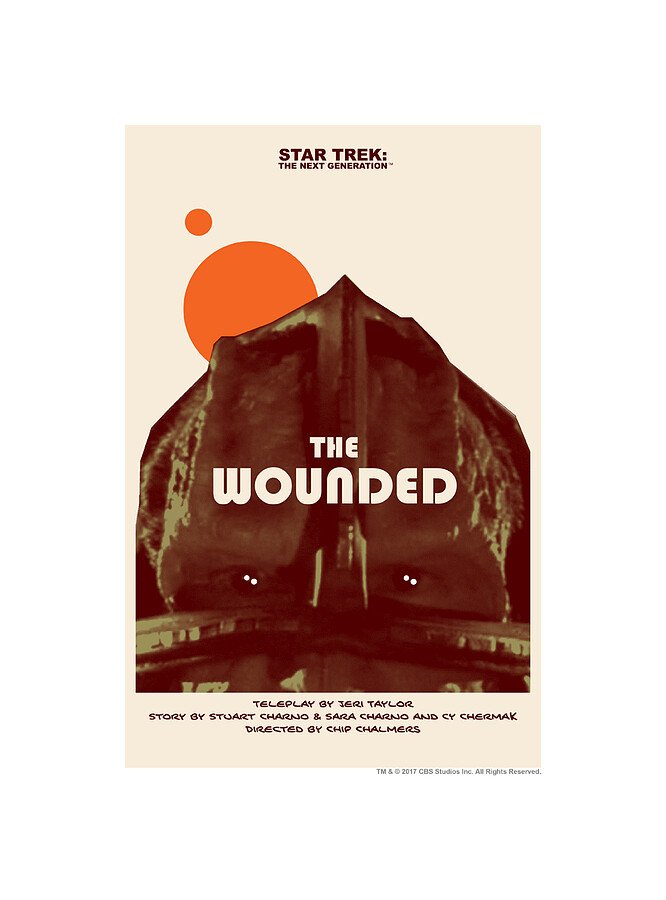
In "The Wounded," we get a deeper look into Cardassian technology, specifically their distinct energy weapon signatures and warp drive capabilities. The episode explores the uneasy truce between the Federation and the Cardassian Union. We see the clear differences in their technological philosophies: Cardassian ships, while visually distinctive, operate with different power systems and weaponry than Starfleet vessels. Their phaser technology, for instance, has a unique energy signature, crucial for identification in a tense standoff. This episode is less about new Federation tech and more about understanding the nuances of another major power's technological distinctives, which directly impacts diplomatic strategies and military engagements. Understanding Cardassian technological distinctives became vital for Starfleet.
"The Mind's Eye" presented a chilling exploration of Romulan capabilities beyond cloaking devices. Geordi La Forge is abducted and subjected to Romulan mind control technology, specifically neural reprogramming designed to turn him into an unwitting assassin. This isn't brute force; it's a sophisticated psychological weapon that exploits the very pathways of the brain. The ability to manipulate consciousness and implant false memories demonstrated a terrifying leap in covert technological warfare, raising profound questions about free will and identity in a technologically advanced galaxy.
These examples show how Star Trek uses technology not just for spectacle, but as a lens through which to examine cultural differences, political tensions, and the very concept of warfare in the 24th century.
The Ubiquitous Wonders: Everyday Tech Refinements
While we've focused on the groundbreaking, Season 4 also continued to feature and refine the everyday technologies that made the 24th century a place of wonder.
- Replicators: From "tea, Earl Grey, hot" to complex meals, replicators remained indispensable. Their efficiency and ability to materialize complex matter from energy allowed the crew to focus on exploration, free from concerns about resource scarcity, a truly foundational piece of Federation tech.
- Transporters: While not central to new concepts in Season 4, the transporter continued its role as a seamless, often taken-for-granted mode of instantaneous travel. Episodes used it for emergency evacuations, rapid deployment, and intricate away team missions, subtly reminding us of its profound impact on interstellar operations. Understanding the intricacies of transporter physics is key to appreciating Starfleet's logistical prowess.
- Medical Technology: Dr. Crusher's Sickbay continued to demonstrate advanced medical diagnostic tools, surgical precision, and rapid healing capabilities far beyond contemporary medicine. From regenerative fields to complex biological analysis, Starfleet medicine ensured the crew's well-being, even against exotic alien pathogens or severe injuries, pushing the boundaries of what's treatable.
These background technologies, while less flashy, are the true workhorses of the Star Trek universe, silently empowering the crew to undertake their grand mission of exploration.
FAQs: Decoding TNG Season 4's Tech and Concepts
Q: Was "Cause and Effect" (the time loop episode) from Season 4?
A: No, "Cause and Effect" is a renowned episode from Star Trek: The Next Generation Season 5. While it deals with complex temporal mechanics, its innovative time travel narrative falls outside of Season 4's specific technological and conceptual explorations.
Q: How did TNG ensure its tech sounded believable?
A: TNG's perceived scientific accuracy and internal consistency were largely due to the "tech notes" created by Rick Sternbach and Michael Okuda. These detailed production guides helped writers and designers ensure that futuristic concepts like AI, warp drive, and various alien technologies adhered to a consistent set of rules within the Star Trek universe.
Q: Did Season 4 introduce any new major alien species' technology?
A: While the Borg were heavily featured from "The Best of Both Worlds, Part II" (a Season 4 opener), Season 4 also significantly showcased Cardassian technology in "The Wounded" and explored Romulan mind-control capabilities in "The Mind's Eye," giving audiences a deeper understanding of these rival powers' distinct technological approaches.
Q: How did Season 4 explore the ethics of AI?
A: Season 4 prominently tackled AI ethics through Data's storyline. In "Brothers," the creation of Lal by Data sparked a major Starfleet debate about the rights and sentience of artificial life forms, pushing the boundaries of what defines "life" and personal autonomy in a technologically advanced society.
The Enduring Resonance of Star Trek TNG Season 4's Innovations
Star Trek: The Next Generation Season 4 wasn't just a collection of compelling episodes; it was a testament to the power of imaginative science fiction to explore profound questions about humanity, technology, and our place in the cosmos. The season pushed boundaries, not merely by showcasing advanced gadgets, but by using them as catalysts for examining identity, consciousness, ethics, and the very nature of reality.
From the terrifying efficiency of Borg assimilation to the poignant quest for sentience by Data and Lal, and the unsettling possibilities of memory manipulation, Season 4 delivered a masterclass in high-concept storytelling. It reminded us that the greatest technologies aren't just tools; they are mirrors reflecting our aspirations, fears, and the complex ethical landscapes we navigate as we reach for the stars.
If these insights have rekindled your appreciation for the ingenuity of the 24th century, there's a whole universe waiting to be rediscovered. Dive back into these pivotal episodes, and Explore TNG Season 4 to experience firsthand how these timeless concepts continue to resonate and inspire. What technological marvel or philosophical conundrum will you ponder next?