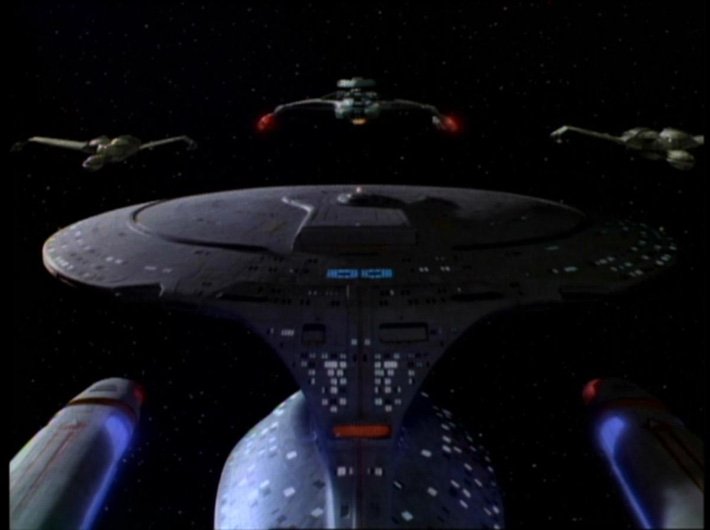
For fans of Star Trek: The Next Generation, Season 4 isn't just another year in the mission; it's a foundational experience that deeply explores the very core of its characters. This pivotal season, airing from 1990-1991, brought unprecedented depth to the crew of the Enterprise-D, shaping the TNG Season 4 Character Arcs & Development into lasting journeys that would resonate through the show's entire run and beyond. It was here that the Enterprise truly found its soul, solidifying relationships, confronting personal demons, and setting the stage for some of Starfleet's most iconic figures to evolve.
At a Glance: Season 4's Character Deep Dive
- Captain Picard's Recovery: Witness his raw emotional aftermath of assimilation, confronting family legacy, and reaffirming his unwavering moral compass.
- Worf's Klingon Odyssey: His journey to reclaim honor accelerates with the introduction of his son, Alexander, and immersion in the complex politics of the Klingon Empire.
- Data's Pursuit of Humanity: Continued exploration of his sentience, confronting his creator, and even attempting romance, alongside critiques of early "emotion chip" concepts.
- Dr. Crusher's Personal Life: A deeper look into her relationships, grief, and a groundbreaking love story that pushed boundaries.
- Riker's Command Readiness: Navigating moral ambiguities, first contact protocols, and a compelling look into his potential future.
- Geordi's Emotional Landscape: From idealized relationships to alien transformations, Geordi faced some of his most personal and unsettling challenges.
- Supporting Players Shine: Miles O'Brien received significant backstory and development, Wesley Crusher grew into his own, and characters like Barclay and Lwaxana Troi gained new dimensions.
- Serialized Storytelling: Season 4 expertly wove ongoing plots, particularly Worf's Klingon saga and the simmering Duras-Romulan threat, giving character development a more persistent weight.
The Enterprise Evolves: Setting the Stage for Deeper Journeys
Season 4 of Star Trek: The Next Generation marked a significant turning point, cementing the show's identity and visual language. Gone were many of the episodic resets of earlier seasons; in their place, we found serialized storylines taking root, notably with Worf's efforts to reclaim his family honor and the looming Duras-Romulan plot. This narrative evolution wasn't just about plot; it provided a richer canvas for character development, allowing the crew to carry their experiences and scars from one adventure to the next.
From the grim aftermath of "The Best of Both Worlds, Part II" to the political machinations of "Redemption, Part I," the season continuously challenged its characters, pushing them into new emotional and ethical territories. Family themes were particularly prominent, exploring the complex dynamics within Picard's, Worf's, and Data's lives, and even introducing new family members like Worf's son Alexander and Tasha Yar's sister, Ishara. This focus on personal connections and lasting consequences elevated the storytelling, making the crew feel more human, more relatable, and more deeply ingrained in the fabric of the Star Trek universe. The groundwork laid here for Star Trek TNG Season 4 was truly essential for the show's enduring legacy.
The Weight of Command: Captain Picard's Enduring Scars
Jean-Luc Picard began Season 4 fundamentally changed. "The Best of Both Worlds, Part II" concludes his traumatic assimilation by the Borg, leaving scars that would influence his character for the rest of his journey and beyond. This wasn't just a physical recovery; it was a profound emotional and psychological one.
The most potent exploration of this trauma arrived in "Family," an episode lauded for its rare display of raw emotion from Picard. While the Enterprise underwent repairs, Picard visited his estranged family vineyard in France. Here, he grappled with his forced actions as Locutus, expressing his rage, grief, and vulnerability to his brother, Robert. This cathartic release was monumental, showing a side of Picard rarely seen – a man profoundly shaken and needing to reconnect with his roots to heal. It underscored that even the most unflappable captain is human, susceptible to the deepest forms of pain.
Beyond this immediate aftermath, Picard continued to evolve as a leader and a mentor. In "Suddenly Human," he navigated the delicate ethical waters of helping a human teenager raised by Talarians decide his future, showcasing his diplomatic prowess and deeply ingrained compassion, even for those with vastly different upbringings. "Final Mission" provided a touching dynamic with Wesley Crusher, where Picard found himself in the pupil's role on a desert planet, with Wesley ultimately saving them both and solving a complex riddle. This moment was crucial for Wesley's development but also highlighted Picard's trust and paternal regard for the young man.
His intellectual curiosity and unwavering moral code were consistently tested. In "Devil's Due," he coolly rejected a seemingly mythic, God-like figure's claim to planetary ownership, asserting logic and reason over superstition. Later, "Qpid" brought back his old flame Vash and the omnipotent Q, forcing Picard into a humorous (and awkward) Robin Hood role-play, revealing his capacity for adventure and a slightly uncomfortable romantic life.
Perhaps most significantly, "The Drumhead" placed Picard squarely in a prophetic tale about the dangers of unchecked power and paranoia. As Rear Admiral Norah Satie led a McCarthyist witch hunt for Romulan spies aboard the Enterprise, Picard stood firm as the voice of justice and reason, challenging the erosion of civil liberties and defending the very principles of the Federation. This episode solidified Picard's role not just as a Starfleet Captain, but as a moral philosopher, a defender of ideals against insidious threats from within.
Warrior, Father, Son: Worf's Klingon Saga Deepens
Worf's journey to reclaim his family honor, ignited in Season 3's "Sins of the Father," became a central, serialized narrative in Season 4. This season peeled back layers of Klingon culture and Worf's personal history, deepening his character far beyond that of a stoic security chief.
"Family" offered a glimpse into his human upbringing, with his adoptive parents, Sergey and Helena Rozhenko, visiting the Enterprise. This provided a tender counterpoint to his Klingon identity, showing the love and stability that shaped him, even as he grappled with a culture that rejected him.
The true turning point arrived in "Reunion," an episode steeped in Klingon politics and blood feuds. Worf's former lover, K'Ehleyr, returned, dropping a bombshell: he had a son, Alexander. This revelation instantly thrust Worf into the complexities of fatherhood, challenging his warrior's identity with paternal responsibility. The episode also saw Picard mediating a Klingon power dispute, leading to the introduction of the formidable Gowron and K'Ehleyr's tragic death at the hands of Duras. Worf's subsequent ritualistic mok'bara — a brutal, honor-bound revenge — solidified his commitment to Klingon ways, even as it left him mourning. The introduction of Alexander and K'Ehleyr's death were pivotal, establishing emotional stakes that would fuel Worf's arc for years.
The culmination of Worf's Season 4 arc was "Redemption, Part I," the season finale. With Gowron's leadership challenged and Romulan manipulation threatening to ignite a Klingon civil war, Worf made the momentous decision to leave the Enterprise. He renounced his Starfleet commission, not out of disloyalty, but to fight for Gowron and restore the honor of his House. This bold move, which reunited him with his brother Kurn and introduced the formidable Duras sisters, Lursa and B'Etor, was a testament to his unwavering commitment to his heritage. It positioned Worf as a central figure in Klingon politics, an arc that would profoundly impact Deep Space Nine as well.
The Quest for Humanity: Data's Logical Heart
Data's ongoing quest to understand and achieve humanity continued to be a rich source of character development in Season 4. While his journey often involved detached observation, this season also saw him navigate increasingly complex emotional and social landscapes.
"Brothers" was a landmark episode, seeing Data hijack the Enterprise to visit his creator, Dr. Noonien Soong. This reunion also brought him face-to-face with his "brother" Lore, an unstable and malevolent android. The episode famously teased the introduction of Data's emotion chip, an idea that, while fascinating, some viewed as a potential betrayal of his character's organic journey toward emotion. Data's very essence was in learning emotions, not having them simply "installed." Nevertheless, it underscored Soong's ongoing influence and the inherent dangers of Lore's existence.
Data's meticulous observations of human behavior formed the core of many episodes. "Data's Day" offered a charming and insightful look at his attempts to master dancing for Chief O'Brien's wedding, all while expertly uncovering a Romulan deception. This episode highlighted his unique blend of logic, observation, and burgeoning social skills. In "Clues," a compelling mystery saw Data as the only crew member consciously aware of a lost day, leading to a unique and telling dynamic with Picard as they worked together to uncover the truth. Data served as an impartial judge in "Devil's Due," his pure logic cutting through superstition and manipulation.
The season also explored Data's attempts at a romantic relationship in "In Theory." While the episode contained humorous moments, the concept of Data finding lasting love was ultimately viewed by some as a missed opportunity, or perhaps too early in his developmental arc to feel truly earned. It was a step, however, in his continuous exploration of human intimacy and connection, even if the execution was debated. Through it all, Data remained the show's philosophical heart, prompting viewers to consider what it truly means to be human.
Beyond the Medical Bay: Dr. Crusher's Personal Growth
Dr. Beverly Crusher, already a skilled physician and caring mother, found her character deepening through personal revelations and challenging ethical dilemmas in Season 4. Her interactions often served to humanize the broader crew and explore the emotional stakes of their missions.
In "Family," Crusher offered Wesley a poignant holo-recording from his late father, Jack, a deeply emotional moment that provided closure for Wesley and underscored Beverly's enduring grief and love for her lost husband. This simple act reinforced her role as the emotional anchor for her family and, by extension, for many on the Enterprise.
Her unwavering trust and competence were highlighted in "Remember Me," where after a warp-field experiment, crew members mysteriously began to disappear. Crusher was the only one who remembered them, and Picard, crucially, believed her without question. This quiet detail was noted as monumental television writing, a powerful statement on trusting and believing women, particularly in a high-stakes, confusing situation.
The most groundbreaking development for Dr. Crusher came in "The Host." She fell deeply in love with Odan, a peace negotiator who was a Trill symbiont. When Odan's original host died, the symbiont was temporarily implanted into Commander Riker to complete crucial negotiations. This forced Crusher to confront the nature of her love, ultimately accepting Odan's new host, even sharing a kiss with him in Riker's body. The episode was a profound exploration of love, identity, and the fluid nature of being, offering important lore for Deep Space Nine and featuring an unprecedented moment for Bev. It challenged conventional notions of romance and identity in a remarkably progressive way for its time.
Second in Command, First in Challenges: Riker's Leadership Trials
Commander William T. Riker continued to grow into his role as First Officer, facing situations that tested his leadership, judgment, and personal integrity. Season 4 often placed him in the hot seat, offering glimpses into the challenges of command.
"Future Imperfect" offered a compelling Romulan espionage tale where Riker awoke sixteen years in the future with no memory. While the ending was somewhat anti-climactic, the journey showcased Riker's resilience and adaptability under pressure, exploring themes of deception and identity.
In "First Contact," Riker found himself hospitalized during a botched pre-first contact mission on a developing planet, Malcor III. His presence sparked xenophobia and hostility, forcing the Enterprise crew to navigate delicate diplomatic waters. The episode humorously pointed out the shortcomings of organized religion versus scientific advancement, with Riker at the center of the cultural clash, demonstrating his capacity for both tactical thinking and vulnerability.
"The Host," as mentioned with Dr. Crusher, also provided a unique challenge for Riker. Temporarily housing the Odan symbiont, he had to grapple with a foreign consciousness and navigate the complexities of Crusher's love for Odan, all while maintaining his duties. It was a rare insight into Riker's inner fortitude and his willingness to sacrifice personal comfort for the greater good of a mission. While he wasn't always at the forefront of emotional arcs this season, Riker's continuous development as a potential captain was steadily reinforced, preparing him for the command he would often defer.
Engineering Empathy: Geordi's Intimate Encounters & Intrigue
Lieutenant Commander Geordi La Forge, the brilliant Chief Engineer, faced a season of both technical puzzles and deeply personal, sometimes unsettling, emotional challenges. His character was explored through his relationships and unexpected transformations.
"Galaxy's Child" saw Geordi grappling with an idealized romantic image. He met Dr. Leah Brahms, the engineer he had fallen in love with on the holodeck. The reality, however, was far from his fantasy. Modern viewers often critique Geordi's behavior in this episode as bordering on creepy or manipulative, as he projected his idealized version onto the real person, creating an uncomfortable situation. It was a fascinating, if problematic, exploration of the line between fantasy and reality and the complexities of human connection.
Geordi found himself at the center of two intriguing mysteries that highlighted his deductive reasoning and vulnerability. In "Identity Crisis," he investigated why members of an away mission from his past began to desert their posts, only to discover he was transforming into an alien creature with an instinct to return to its home planet. This episode was a solid mystery, blending evolutionary horror with scientific investigation, showing Geordi literally changing from within.
Later, in "The Mind's Eye," Geordi became the unwitting victim of a Romulan "Manchurian Candidate" plot, secretly manipulated to assassinate a Klingon official. This expertly woven tale of intrigue showed Geordi acting subtly against his character, with touching and disturbing final moments with Counselor Troi as they tried to uncover the truth. These episodes showcased Geordi's resilience, his intelligence, and the often-unseen struggles he faced due to his VISOR and unique physiology.
The Evolving Empath: Deanna Troi's Vulnerabilities
Counselor Deanna Troi, typically the emotional anchor of the Enterprise, faced personal vulnerabilities and challenges to her empathic abilities in Season 4. While some of her episodes were less impactful, others delved into the psychological depth of her character.
"The Loss" saw Troi mysteriously lose her empathic abilities when an unknown force captured the Enterprise. While described as forgettable filler with no lasting impact on her arc, it presented her with a unique struggle, forcing her to rely on her training and intellect rather than her natural gifts. This temporary vulnerability would have been a more potent development had it been given greater weight and consequence.
"Night Terrors" provided a creepier, more Lovecraftian exploration of Troi's mind. Trapped in a rift, the crew succumbed to REM sleep deprivation, and Deanna experienced recurring, disturbing nightmares. This episode highlighted her empathic sensitivity as both a gift and a curse, making her uniquely susceptible to the psychological horror of their predicament. It showed her as a conduit for the crew's collective unease, forcing her to confront profound mental distress.
Her mother, Lwaxana Troi, also had a significant character arc in "Half a Life." While primarily about Lwaxana, Deanna's reaction to her mother's budding romance and subsequent heartbreak with Timicin provided a window into her own emotional maturity and her evolving relationship with her often-overbearing parent. It was a heartfelt tale of loss and letting go, witnessed through Deanna's sympathetic eyes.
From Ensign to Hero: Wesley's Lasting Impact
Wesley Crusher, often a polarizing character, began his final full season on the Enterprise taking significant steps toward adulthood and independence. Season 4 effectively positioned him for his eventual departure from Starfleet.
"Family" offered a poignant moment as Wesley received the holo-recording from his deceased father, providing emotional closure and a deeper understanding of his legacy. This helped ground his character, moving him beyond simply being the "boy genius" to someone grappling with profound personal history.
His most notable development came in "Final Mission," where he embarked on a mission with Picard that left them stranded on a desert planet. Here, Wesley truly came into his own, demonstrating remarkable ingenuity and maturity by saving Picard and solving a complex riddle. This episode beautifully highlighted a touching Picard/Wesley dynamic, showcasing Picard's pride in Wesley's growth and Wesley's ability to stand as an equal, ready for the next stage of his life beyond the Enterprise. These moments were crucial in establishing his readiness for future endeavors at Starfleet Academy, making his eventual departure feel earned rather than abrupt.
The Unsung Hero: Chief O'Brien's Foundational Arc
Miles O'Brien, initially a background transporter chief, underwent significant character growth in Season 4, laying the groundwork for his pivotal role in Deep Space Nine. This season provided him with a name, a family, and a traumatic past that added remarkable depth to his character.
"Data's Day" saw O'Brien in a rare personal spotlight as he prepared for his wedding. Data's observations of O'Brien's attempts to master dancing and navigate social customs provided a humorous and endearing glimpse into the Chief's life outside his duties. It was a moment of levity that humanized him, showcasing his quiet dedication and personal joy.
The true cornerstone of O'Brien's Season 4 development was "The Wounded." This episode introduced the Cardassians and explored O'Brien’s traumatic history with them during the Federation-Cardassian War. It delved into the lasting psychological scars of conflict and the insidious nature of racism, as O'Brien struggled with his deep-seated animosity towards his former enemies. The episode was praised as a responsible and nuanced exploration of these difficult themes, giving O'Brien a profound backstory and establishing him as a character with rich internal conflict. It was a testament to the show's ability to elevate supporting characters, transforming a minor role into one of the most relatable and deeply explored figures in the Star Trek universe.
A Tapestry of Supporting Players: New Dimensions and Lasting Impressions
Season 4 wasn't just about the main bridge crew; it also provided crucial development for recurring characters and introduced memorable new ones who left their mark.
- Reginald Barclay: In "The Nth Degree," the socially awkward and anxiety-prone Ensign Barclay experienced immense leaps in confidence and intelligence after an encounter with an alien probe. Dwight Schultz's portrayal of Barclay was highlighted as one of the franchise's best side characters, offering a relatable figure who struggled with self-doubt but possessed untapped potential. This episode explored themes of enhancement and the true source of one's abilities, giving Barclay a powerful, if temporary, transformation.
- Lwaxana Troi: While often used for comedic effect, Lwaxana received a surprisingly heartfelt and poignant arc in "Half a Life." Her deep love for Timicin, and her subsequent struggle with his culture's ritualistic suicide, showcased a vulnerability and emotional depth rarely seen from Deanna's flamboyant mother. This episode allowed Lwaxana to transcend her usual caricature, revealing a woman capable of profound love and loss.
- Ishara Yar: Tasha Yar's sister, Ishara, introduced in "Legacy," provided an interesting, though ultimately failed, attempt at adding depth and nostalgia around Tasha's tragic death. While her character offered a glimpse into the harsh realities of Tasha's home planet, the attempt to establish a lasting connection or profound impact ultimately fell short, proving that not every legacy character could resonate as deeply.
These secondary arcs, woven throughout the season, added texture and complexity to the overall narrative, demonstrating the show's commitment to building a rich and believable universe populated by diverse, evolving individuals.
Why Season 4 Remains a Benchmark for Character Storytelling
Star Trek: The Next Generation Season 4 is widely regarded as a pinnacle of the series, and for good reason. CBR rated it as the 12th best season across all Star Trek iterations up to 2019, a testament to its consistent quality and enduring impact. This wasn't just a season of great episodes; it was a season of great character writing.
What makes Season 4 so compelling is its willingness to let characters truly evolve. Picard wrestled with Borg trauma, Worf grappled with Klingon destiny and fatherhood, Data deepened his quest for humanity, and O'Brien gained a crucial backstory. These were not minor tweaks but profound shifts that anchored the show in emotional reality and laid critical groundwork for future seasons and spin-offs. The serialized elements, especially those surrounding Worf and the Klingon Empire, allowed for continuous development, making each character's journey feel more like a grand saga than isolated adventures.
The season balanced high-concept science fiction with deeply personal stories, using complex dilemmas to reveal the inner workings of its diverse cast. It showcased how traumatic events leave lasting scars, how families shape us, and how the pursuit of one's identity is an ongoing voyage.
Looking Ahead: The Echoes of Season 4's Legacies
The character arcs and developments forged in TNG Season 4 weren't just for that year; they were foundational. Picard's post-Borg trauma continued to resonate for decades, influencing First Contact and even Star Trek: Picard. Worf's commitment to his Klingon heritage became central to Deep Space Nine. Chief O'Brien's traumatic experiences with the Cardassians defined his character throughout his time on DS9.
If you're looking to understand why these characters became icons, why The Next Generation is often considered the gold standard of Star Trek, look no further than Season 4. It’s a masterclass in how to develop a diverse ensemble, balancing individual growth with overarching narratives, and proving that even in the vastness of space, the most compelling journeys are often those within. Revisit these episodes not just for their engaging plots, but for the profound human (and non-human) stories that defined the heart of Starfleet.