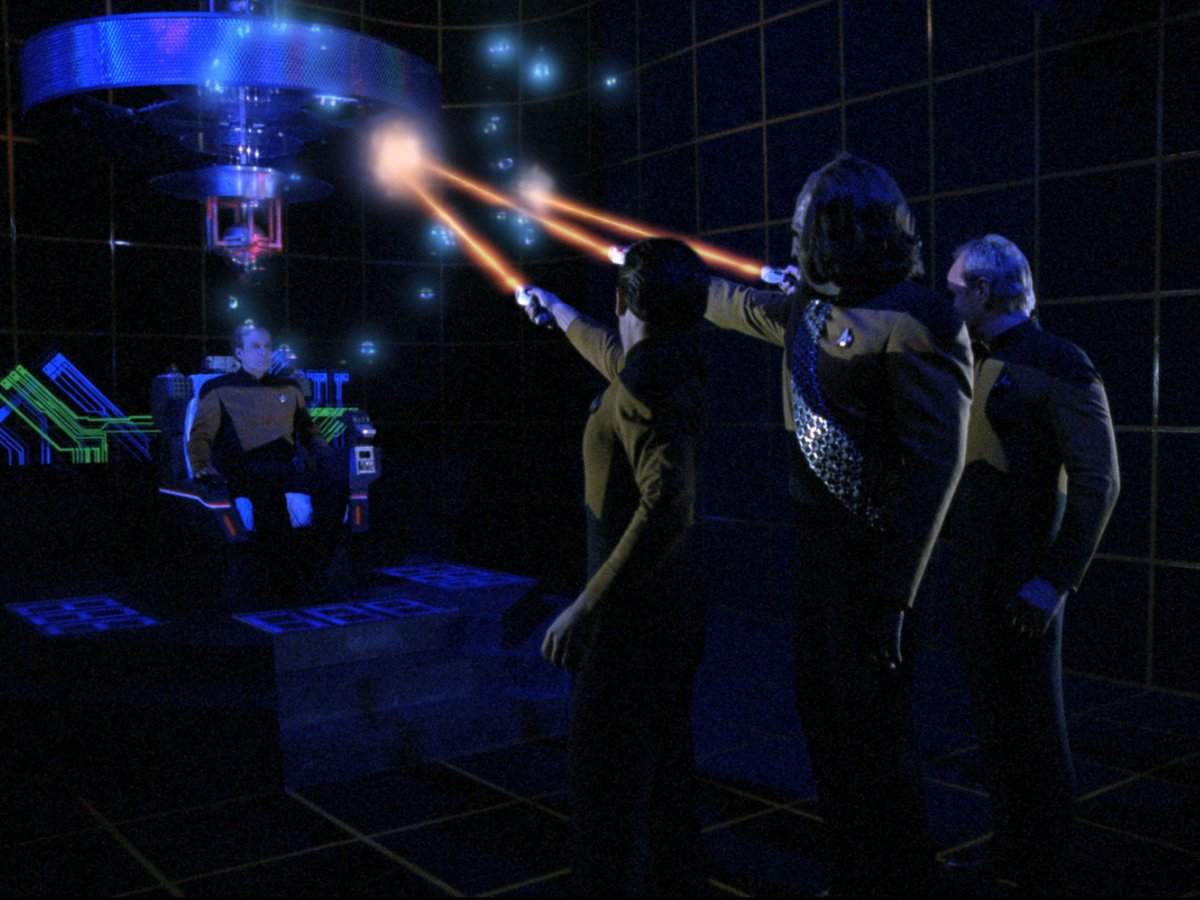
Thirty-plus years after its original airing, Star Trek: The Next Generation Season 4 remains a pivotal, oft-debated cornerstone of the franchise. It’s a season that didn't just tell compelling weekly stories; it dramatically reshaped character arcs, introduced species that would anchor future series, and left behind a trail of lingering questions and intriguing fan theories that continue to fuel online forums and convention discussions. From the harrowing aftermath of Borg assimilation to the complex tapestry of Klingon politics and Data's relentless pursuit of humanity, the lore established and deepened here is foundational.
If you’re diving back into The Next Generation Season 4 with fresh eyes, or simply curious about why specific episodes still resonate, you’re in for a treat. This season isn't merely about adventure; it’s about the profound implications of those adventures on Starfleet's finest, and by extension, on the Star Trek universe itself.
At a Glance: Why TNG Season 4 Endures
- Picard's Trauma & Recovery: The season opener delivers powerful insights into the psychological toll of Borg assimilation.
- Worf's Klingon Odyssey: A deep dive into Klingon politics, honor, and family drama, setting up major future storylines.
- Data's Humanity Quest: Significant strides in Data's understanding of emotions, relationships, and his origins.
- New Species & Factions: Crucial introductions like the Cardassians and Trill, impacting the broader Star Trek universe for decades.
- Wesley's Farewell (for now): A graceful send-off for a polarizing character, opening new narrative possibilities.
- Recurring Villains & Allies: Q returns, Vash reappears, and the Romulan threat gains a shocking new face.
- Moral & Ethical Dilemmas: Episodes pushing the boundaries of Federation ideals and Starfleet directives.
The Echoes of Wolf 359: Picard's Unseen Scars
Season 4 blasts off not with a bang, but with a shudder – the immediate aftermath of "The Best of Both Worlds." While the Enterprise achieves a brilliant, if desperate, victory against the Borg, the real battle for Captain Picard begins in "Family" (4x02). Reviewers lauded "Family" for its powerful, continuity-rich portrayal of Picard grappling with his trauma on his family's vineyard. It's a rare episode devoid of bridge scenes or action, focusing instead on raw emotion and quiet reflection.
Canon Deep Dive: Picard’s vulnerability, his lashing out at his brother Robert, and his eventual catharsis against the soil of his family home, cement the idea that even a Starfleet captain isn't immune to profound psychological injury. This wasn't a one-off emotional moment; it’s a canonical wound that would resurface in later episodes and even other series, shaping his decisions and worldview. The quiet determination he exhibits in "The Best of Both Worlds, Part II" (4x01), especially after recovering from the assimilation, is undercut by this later, necessary release.
Fan Theories & Debates:
- Long-Term Psychological Impact: Fans debate how much of Picard’s later intensity or stoicism stemmed directly from this trauma. Was his reluctance for personal relationships, or his occasional recklessness, a direct consequence? Some argue that Picard never truly "got over" Locutus, merely learned to compartmentalize, and this unresolved trauma played a role in his later decisions, including leaving Starfleet in Picard.
- The Unseen Therapy: Did Picard undergo further psychological treatment beyond what was shown? Starfleet has counselors, but "Family" suggests the most profound healing came from personal connection and introspection, raising questions about the efficacy of formal psychological care for deep-seated trauma within the Federation.
- Robert Picard's Wisdom: Robert's role in "Family" is often cited as crucial. He forces Jean-Luc to confront his pain. Fan theories sometimes speculate on how Robert's grounding, non-Starfleet perspective might have subtly influenced Picard’s command style going forward, perhaps making him more empathetic to the human condition despite his own aloofness.
Data's Relentless Pursuit: Emotion, Family, and Love (or Lack Thereof)
Season 4 delivered a trio of pivotal Data episodes, each probing a different facet of his quest for humanity. "Brothers" (4x03) brings back Lore and introduces his creator, Dr. Soong, in a visually and intellectually thrilling triple performance by Brent Spiner. "Data's Day" (4x11) offers a delightful slice-of-life look into Data's meticulously structured existence and his attempts to understand social rituals. Finally, "In Theory" (4x25) sees Data deliberately explore a romantic relationship.
Canon Deep Dive:
- The Soong Legacy: "Brothers" is crucial for establishing Data's direct lineage. Lore's existence as a 'flawed' older brother and Soong's dying wish to provide Data with an emotion chip solidifies Data's unique place as the culmination of Soong's work. The episode canonizes Soong’s complex motivations – a desire for a perfect android, a fatherly love for his creations, and a tragic inability to perfect his work before his death. Data gaining control of the ship, albeit unknowingly, also highlights his extraordinary capabilities.
- Everyday Humanity: "Data's Day" offers crucial character development for O'Brien and Keiko, whose wedding becomes a charming backdrop for Data's observations. More importantly, Data's communication with Bruce Maddox (from "The Measure of a Man") demonstrates his continued interest in cybernetics research and his lack of bitterness towards Maddox, showcasing his remarkable capacity for growth and dispassionate inquiry.
- The Relationship Experiment: "In Theory" sees Data program himself to experience a relationship with Lt. Jenna D'Sora. While reviewer comments called it "somewhat ridiculous" and "mere performance," it was a significant step in Data’s understanding of human social constructs, even if the emotional depth was missing. He learns about theoretical flaws and embracing contradiction through Jenna, lessons he applies to his understanding of humanity.
Fan Theories & Debates: - The Missing Emotion Chip: Soong creates an emotion chip for Data but Lore steals it. Fans often wonder if Data would have been able to handle emotions earlier and more effectively had he received the chip as intended. Could it have circumvented the long, painful process seen in Star Trek Generations?
- Jenna D'Sora's Motivations: Reviewers noted Jenna's motivations were "unclear." Was she genuinely attracted to Data, or was she seeking a unique experience, or even exploiting his emotional unavailability for her own reasons? Fans debate the ethics of Data's experiment from Jenna's perspective, questioning if he inadvertently led her on, despite his logical intentions.
- Data's True Feelings for Humanity: Was Data's pursuit of emotion purely academic, or was there a nascent, unacknowledged longing for connection driving him? "In Theory," despite its flaws, suggests a deeper, perhaps unconscious, desire to feel rather than merely understand. The casual dismissal of the death of a crewmember in "In Theory" also led some fans to question if Data's emotional experiment truly taught him empathy, or if he was still too far removed from human grief.
The Klingon Heart of Darkness: Worf's Redemption Arc Begins
Season 4 is a critical chapter in Worf's ongoing saga, deepening the lore of the Klingon Empire and setting the stage for future conflicts. "Reunion" (4x07) is a powerhouse episode, lauded for its fantastic storytelling and impact. It sees the deaths of Chancellor K'mpec, K'Ehleyr, and Duras, introducing Alexander and Gowron, and culminating in Worf’s honorable, if tragic, murder of Duras. This leads directly into "Redemption, Part I" (4x26), the season finale, which finds Picard encouraging Worf to challenge his discommendation, sending the Enterprise to the Klingon homeworld amidst a brewing civil war.
Canon Deep Dive:
- Klingon Succession & Politics: These episodes provide an unparalleled look into the brutal, honor-bound, and often corrupt world of Klingon politics. The succession crisis following K'mpec's death, Gowron's rise, and the continued machinations of the Duras family (despite Duras's death) establish a rich, complex political landscape that would directly influence Deep Space Nine.
- Worf's Discommendation: Worf's discommendation, first introduced in "Sins of the Father" (Season 3), becomes a central theme. "Reunion" shows how it impacts his involvement in Klingon affairs, leading to his direct, personal conflict with Duras. His act of revenge for K'Ehleyr's death is a stark example of Klingon justice, resonating deeply within the canon.
- Sela's Introduction: "Redemption, Part I" delivers a shocking twist with the revelation of Sela, a Romulan agent who is Tasha Yar's daughter from an alternate timeline. This unexpected connection between a beloved fallen crewmate and a new adversary created a compelling, if initially "lame" for some reviewers, new plot thread that would weave through future seasons. Picard's suspicion of a Romulan connection to the Duras family highlights the ongoing cold war between the Federation and the Romulan Star Empire.
Fan Theories & Debates: - Gowron's True Intentions: While Gowron is presented as a strong, if volatile, leader, some fans debate if he was truly a just ruler or just another ambitious Klingon opportunist. His later actions in DS9 sometimes fuel this debate.
- Worf's Future: After "Reunion," Worf’s path is clearly altered. Fans speculate about how different his Starfleet career would have been without the discommendation and his deep involvement in Klingon affairs. Did it ultimately make him a better, more nuanced officer, or did it perpetually pull him away from Federation ideals?
- The Legacy of Duras: Even with Duras dead, his family's influence persists. This led to fan theories about the deep-seated corruption within the Klingon High Council and how difficult it is to truly purge such power structures.
- Sela's Backstory: The concept of Tasha Yar having a Romulan daughter from an alternate timeline (from "Yesterday's Enterprise," TNG S3) instantly sparked extensive fan discussions. How did she get there? How did she rise to power so quickly? Was her animosity towards the Federation and Picard genuine, or was there a part of Tasha Yar buried deep within her?
New Horizons & Lingering Questions: Species, Technology, and Morality
Season 4 was rich with "alien of the week" episodes that, while sometimes criticized, often introduced fascinating concepts or set up important lore for the wider Star Trek universe.
- The Cardassians Arrive ("The Wounded," 4x12): This episode is a landmark, introducing the deceptive and warlike Cardassians and solidifying Chief O'Brien's character arc. Reviewers called it a "great introduction" to the species.
- Lore Impact: It establishes the Cardassian Union as a significant, antagonistic power on the Federation's border, setting the stage for the Bajoran conflict and Deep Space Nine. The uneasy truce between the Federation and Cardassians, and the moral complexities of engaging with a former enemy, became central themes.
- Fan Theories: Many theories revolve around the initial Federation-Cardassian War – how brutal was it? What unwritten history lies between the two powers? The character of Captain Maxwell, O'Brien's former commanding officer, is a symbol of lingering resentment, and fans ponder if similar "maverick" captains were operating against Cardassians during the early truce period.
- The Trill Unveiled ("The Host," 4x23): This episode introduces the "fascinating Trill species," a blended species of symbiont and host. Odan merges with Riker, showcasing a personality bleed.
- Lore Impact: While the Trill concept would be revised for Jadzia Dax in DS9 (specifically, the host's appearance and the nature of the symbiont merging), this episode laid the groundwork for one of Star Trek's most unique species. It explores profound questions of identity, memory, and continuity of consciousness.
- Fan Theories: Fans often compare this initial Trill portrayal to the later one, wondering about the "in-universe" reasons for the change (e.g., Odan being a rare type of Trill, or Starfleet's understanding improving). The idea of Riker's personality bleeding into Odan also sparks debate about the symbiont's influence on hosts, especially in extreme situations.
- The Cytherians' Gift and Federation Priorities ("The Nth Degree," 4x19): After an amazing beginning, this episode introduces the benevolent Cytherians and an "amazing propulsion technique." However, this tech is not retained by the Enterprise, for "undisclosed reasons," which the reviewer disliked.
- Lore Impact: The episode briefly teases hyper-advanced technology and a species far beyond Federation capabilities, expanding the known universe. Barclay's transformation and brief return to normal after interacting with the Cytherian database hint at the potential for rapid intellectual advancement.
- Fan Theories: This is prime territory for fan theories. Why wouldn't Starfleet adopt such a revolutionary propulsion system? Theories range from:
- Technological Ethics: The Federation deems such advanced, potentially unstable, or poorly understood tech too risky, especially if it fundamentally alters biology like it did with Barclay.
- Prime Directive: Non-interference with the Cytherian's natural development, even in technological exchange.
- Narrative Necessity: The most common theory – the writers needed to avoid making the Enterprise too powerful and thus limiting future stories. But in-universe, this remains a significant "loose end."
- The Traveler Returns & Wesley's Departure ("Remember Me," 4x05 & "Final Mission," 4x09): The Traveler reappears with Wesley, picking up a loose thread from earlier seasons, eventually leading to Wesley's acceptable send-off.
- Lore Impact: These episodes cement Wesley's unique destiny as more than just a Starfleet prodigy. His connection to the Traveler and his eventual departure to explore different planes of existence elevates him to a more cosmic, almost spiritual role within the Star Trek universe. "Final Mission" provides a fitting, action-packed farewell that many considered superior to earlier character exits.
- Fan Theories: What exactly is the Traveler's species? What are the implications of Wesley's "higher plane" existence? Fans speculate about what Wesley learned, what powers he gained, and what "cosmic" missions he undertook during his time away from Starfleet. His later cameo in Picard reignited these discussions, confirming his continued involvement with the Travelers.
Moral Mazes and Human Flaws: Ethical Debates in Season 4
Not every episode was about space battles; many explored deeper philosophical and ethical questions that challenge the very fabric of Federation ideals.
- The Ethics of Childhood ("Suddenly Human," 4x04): Picard makes the moral choice to return Jono, a human boy raised by a warring alien race, to his original people. Reviewers found the ending morally sound but regretted not seeing Jono’s grandmother’s reaction or the revisit of this previously unmentioned alien race.
- Lore Impact: This episode reinforces the Federation's commitment to cultural self-determination, even in complex cases involving child rearing across species. It highlights the Prime Directive's nuances.
- Fan Theories: Did Jono ever truly adjust? What impact did his return have on the alien culture? The lack of follow-up leaves room for speculation about the long-term consequences of Picard's difficult decision.
- The Dangers of Paranoia ("The Drumhead," 4x21): This episode tackles a "real moral dilemma" about fear, uncertainty, and doubt, but some reviewers found its execution "offensive" with characters acting out of character. Picard, however, remains true to himself.
- Lore Impact: It serves as a powerful cautionary tale about the dangers of unchecked paranoia and McCarthyism, even within the enlightened Federation. Picard's staunch defense of civil liberties and due process is a canonical demonstration of core Federation values.
- Fan Theories: How prevalent are these xenophobic and paranoid sentiments within Starfleet? Were characters truly "out of character," or did the extreme pressure reveal hidden biases or weaknesses within the crew, offering a more realistic (and unsettling) view of even Starfleet personnel? The unresolved plot threads (Tarses, Romulan-human marriage) still leave fans wondering about their implications for Federation security and societal views.
- The Right to Choose Death ("Half a Life," 4x22): This powerful episode, praised for Lwaxana Troi's unexpected depth, explores the ethical question of prolonging or purging the lives of the elderly through the Ventaxian "Resolution."
- Lore Impact: It presents a nuanced discussion on the morality of euthanasia and cultural relativism, showcasing the Federation's struggle to respect differing societal norms while upholding universal rights. Lwaxana's passionate speeches are extraordinary and resonate with the audience.
- Fan Theories: Does the Federation have a clear stance on assisted suicide or mandatory euthanasia practices in other cultures? This episode implies a delicate balancing act, and fans often debate where the line should be drawn in terms of Prime Directive interference when fundamental human (or humanoid) rights are at stake.
Character Deep Dives and Hidden Gems
Beyond the major arcs, Season 4 also offered important character development for the ensemble and introduced minor but memorable elements.
- Geordi's Personal Journey ("Galaxy's Child," 4x16, "Identity Crisis," 4x18): "Galaxy's Child" revisits Dr. Brahms, Geordi's holographic partner, and explores his personal growth. "Identity Crisis" delves into Geordi’s past assignments and features "cool" alien species.
- Impact: These episodes give Geordi depth beyond his engineering prowess, showing his vulnerability and his detective skills.
- Fan Theories: The return of Dr. Brahms sparked discussions about AI and hologram sentience. Was Geordi's attraction to her problematic? What are the ethical implications of creating sentient AI for personal companionship?
- Troi's Empathic Challenges ("The Loss," 4x10, "Night Terrors," 4x17): Troi temporarily loses her empathic powers, experiencing an "extreme suffering cliché," and later faces nightmares.
- Impact: These episodes explore the psychological impact of losing a fundamental sense and dealing with collective fear.
- Fan Theories: Was the loss of empathy a critical turning point for Troi, forcing her to rely more on logic and observation? Did it make her a stronger counselor in the long run?
- Q's Return and Vash's Adventures ("QPid," 4x20): Q returns, bringing Vash back into Picard’s life in a wonderfully cohesive episode, picking up plot threads and setting up future adventures.
- Impact: "QPid" is a fan-favorite, cementing the dynamic between Q and Picard, and between Vash and Picard. It also directly sets up Vash's later appearances in DS9.
- Fan Theories: What is Q's true affection for Picard? Is it a genuine fondness or a fascination with his unique humanity? What kind of life did Vash lead after QPid, and how did she acquire the skills and knowledge seen in DS9?
The Enduring Legacy of Season 4's Lingering Questions
Season 4 of The Next Generation didn't just tell stories; it initiated conversations. From the psychological undercurrents of Picard's command to the complex political maneuvering of the Klingon Empire and Data's unending quest for self-discovery, the season laid substantial groundwork for the entire franchise.
Many of the "flaws" or "loose ends" identified by contemporary reviewers—like the failure to revisit certain alien races ("Suddenly Human"), the mysterious Romulan conclusion in "Future Imperfect," or the unexplained abandonment of advanced propulsion technology ("The Nth Degree")—are precisely what keep fans debating decades later. These aren't necessarily plot holes but rather tantalizing gaps that invite speculation, giving rise to robust fan theories that enrich the understanding of TNG's universe beyond the screen.
Ultimately, Season 4 serves as a testament to Star Trek's ability to build complex, evolving lore while simultaneously asking profound ethical questions. Its impact resonates, inviting both nostalgic rewatches and fresh analyses, ensuring that the debates around its characters, canon, and hypothetical "what-ifs" will continue for many years to come.